Inhaler Testing: Methods, Equipment and Automation
Share this article
Cascade Impactors
Cascade impactors are laboratory instruments used to collect and classify particles by their aerodynamic size. They work by drawing air or gas through a vacuum pump at a controlled flow rate. The airflow then passes through a series of stages containing nozzles that decrease in diameter. Larger particles will break away from the airstream onto a collection plate. Smaller particles will continue their journey through the airflow to subsequent stages until the smallest particles are trapped by the final backup filter.
Andersen Cascade Impactor - alternatively spelt as Anderson Cascade Impactor - (ACI) and Next Generation Impactor (NGI) are the two impactors most commonly used to determine APSD. Their different stage-by-stage depositions enable users to examine how airborne particles behave in the respiratory system.
ACI, which takes the form of a small stack of round metal plates, has been developed to measure the size of medicine droplets and each stage of its stacks simulates the characteristics of the respiratory tract, enabling users to track how far drugs will travel into the lungs.
NGI, specifically developed for modern pharmaceutical inhalers, contains a flat, single-layer tray design that moves airflow through a single line of stages to measure droplets across a range of different air speeds.
NGI Sample Recovery
When using NGI, the process of recovering API samples can become a manual bottleneck. Collecting from cup trays is slow, repetitive and a source of variability between different lab analysts. An obvious solution to the problem is automation.
Astech’s NGI Sample Recovery System automates sample preparation and recovery from NGI equipment. Collecting samples from NGI cup trays in this way not only reduces manual labour, but also enhances data integrity.
Dose Content Uniformity
DCU testing is a quality control procedure used to ensure that every dosage unit (tablet, capsule etc.) contains the correct, consistent amount of the API. Testing certifies that each dose is safe and effective.
Inhaler Shaking and Waste FIring
Inhaler shaking and inhaler waste firing are two distinct device-handling steps that precede testing. Both play a vital role in guaranteeing the safety of inhaled medications.
Inhaler shaking testing provides data on the size of dose emitted from the device, plus information on particle size distribution and the velocity of the medication. Inhaler waste firing refers to the safe collection of API samples from medical devices that happens whilst measuring DCU.
Testing by Device Type
Different inhaler types are tested for different metrics:
Dry powder inhaler (DPI) testing evaluates how the powder formulation, device resistance and patient airflow affects dose delivery and particle size.
Pressurised Metered Dose Inhaler (pMDI) testing verifies dose leak rate, and valve or canister performance to check on consistent dosing and quality.
Nebulisers are tested for aerosol output rate, total delivered dose, droplet size distribution and fill volume.
Where Automation Fits
Bottlenecks may naturally occur when manually testing inhalers because the process is slow and often repetitive. Unattended running can lead to repeatability between analysts and laboratory throughput becoming compromised.
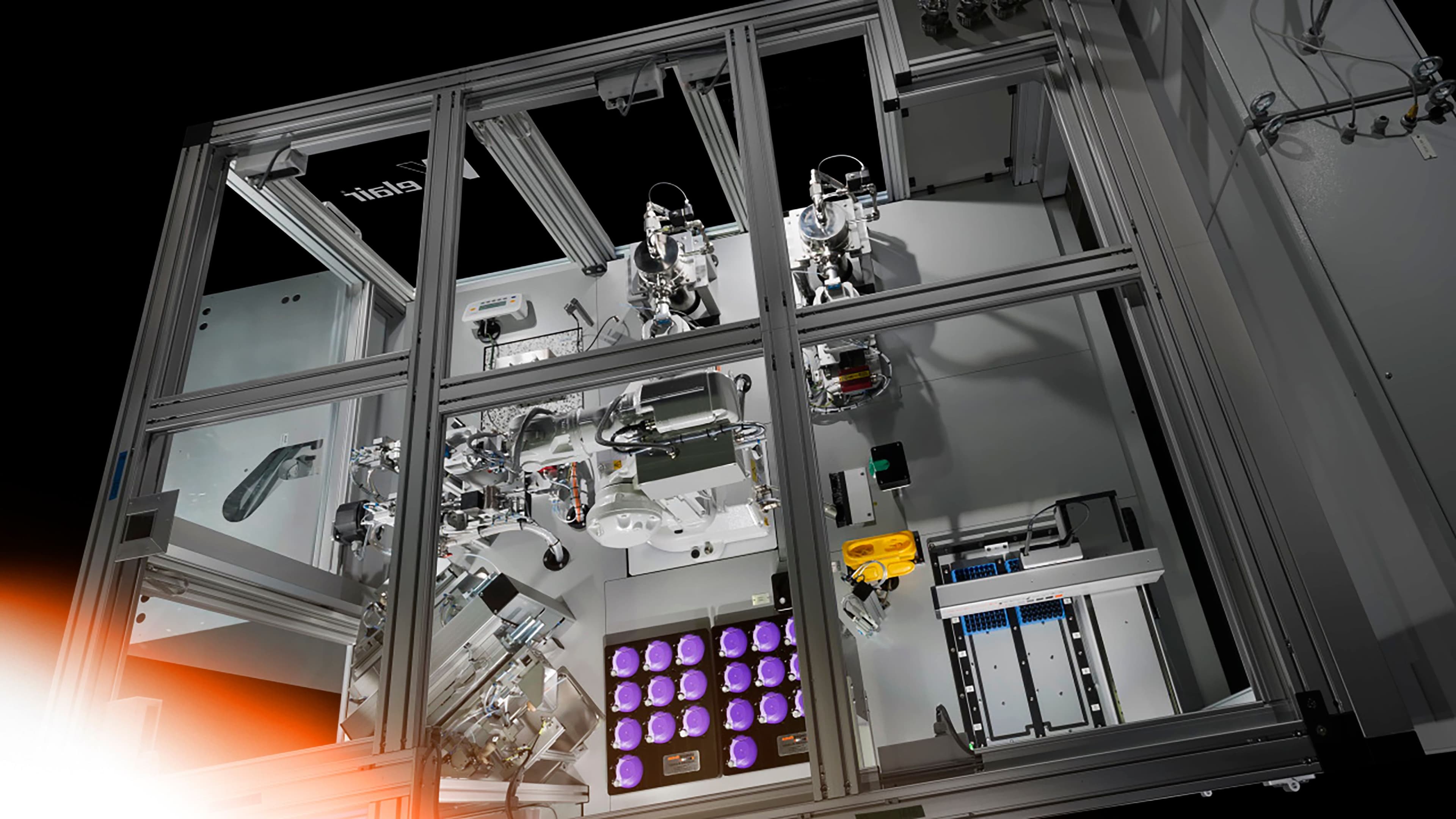
This is where Astech’s Xelair® and Xelox® can help. Xelair® is a flexible automation platform for dose content uniformity testing, which can adapt to the individual requirements of each lab, ensuring consistent, harmonised data. Xelox® delivers advanced automation for NGI testing. Its scalable design, which is tailored to each lab's workflow, reduces manual labour and enhances data integrity. For more information on both, contact us today.
FAQs
How does a cascade impactor work?
It uses a vacuum pump to draw airflow through a series of stages containing nozzles that decrease in diameter. Larger particles will break away from the airstream onto a collection plate. Smaller particles will continue their journey through the airflow to subsequent stages.
What is the difference between an NGI and an Andersen cascade impactor (ACI)?
An NGI contains a flat, single-layer tray design, whilst an ACI is designed like a small stack of round plates to simulate the respiratory tract. Both impactors measure the size of medicine droplets.
What is aerodynamic particle distribution (APSD)?
APSD measures how particles are distributed according to their aerodynamic diameter, helping to predict where inhaled aerosols will deposit in the respiratory tract.
What is dose content uniformity (DCU) testing?
It’s quality control testing to ensure that every dosage unit (tablet, capsule etc.) contains the correct, consistent amount of the active pharmaceutical ingredient (API).
How is dry powder inhaler (DPI) testing different from pMDI testing?
DPI testing evaluates how the powder formulation, device resistance and patient airflow affects dose delivery. pMDI testing examines inhaler performance to check on dose consistency and quality.