





Laboratory Automation
What is Laboratory Automation?
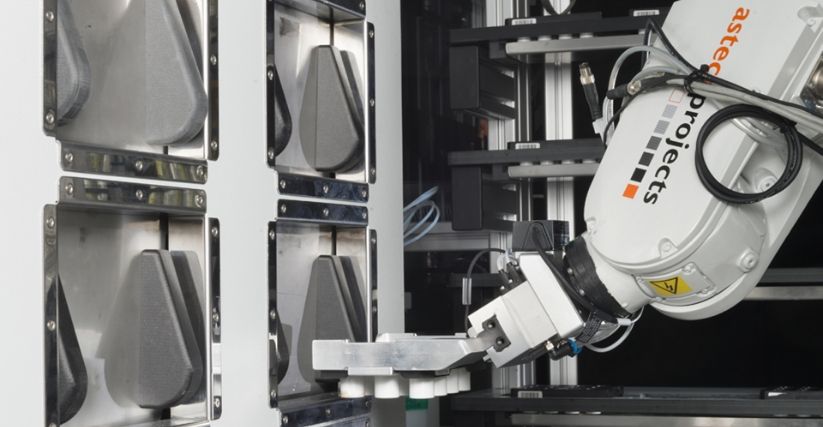
Laboratory automation is the application of technology - robotics, software and integrated systems to perform repetitive, high-precision lab tasks with minimal, manual intervention. Astech is a UK-based automation specialist, designing and building bespoke laboratory automation systems for pharmaceutical, biopharma, clinical, and environmental labs. Our fully customised automated laboratory systems portfolio includes sample handling, liquid dispensing, analytical instrument integration and robotic platforms.

Benefits of Laboratory Automation
There are many benefits to efficient lab process automation. Replacing recurrent manually-performed procedures with integrated laboratory automation solutions minimises human error, therefore improving reproducibility and increasing throughput and sample capacity. This leads to better traceability and audit trails for regulated environments, freeing up scientists for higher-value analytical work like deep data analysis. Astech’s laboratory automation software solutions provide scalability from low-volume R&D to high-throughput manufacturing. We don’t offer off-the-shelf. Each custom-built system is designed to meet our client’s unique needs. Streamlining complex lab workflows and integrating with existing lab equipment and MES/LIMS systems.
Automated Drop Testing
Cobot Reagent Filling Systems
Consumer Goods Testing
Polymer Catalyst Discovery
High Throughput Formulation
Microbiology Sample Preparation

Astech Laboratory Automation Systems
Astech’s core laboratory automation equipment and systems offerings are our robotic lab products, including the next-generation Robotic Lab Assistant (RLA), a 6-axis collaborative arm on an autonomous mobile platform that bridges the gap between manual and automated processes; Astech’s automated sample preparation systems; and our custom assembly/test automation for lab environments. Each clinical laboratory automation system we provide is bespoke. Designed and built to the client’s specific lab environment, process and regulatory requirements. Astech’s custom lab automation is fully integrated with validation and verification (V&V) requirements for pharmaceutical and clinical labs. Our lab process automation systems are built to pass validation from day one.

Real-World Impact: How Automation Transforms Workflows
Automation has revolutionised workflows by taking on tasks that traditionally required manual effort, for example: sample handling, plate management, reagent preparation, data logging and repetitive testing - performing these tasks with more speed, accuracy and efficiency. Automation systems provide more consistent results, faster turnaround times and better compliance with regulations.

LabExpert - Laboratory Workflow Automation Software
Astech’s expertise in laboratory workflow automation is evidenced clearly in LabExpert, our scheduling and management software. Designed to sit on top of individual lab systems, this layer of software to automate lab workflows coordinates, sequences and optimises what occurs in each laboratory. It schedules instrument use, manages sample queues, reduces bottlenecks and provides real-time visibility of lab activity. Lab automation workflow is the bridge between hardware automation and workflow efficiency. Our custom laboratory automation streamlines the physical process, and is complemented by LabExpert, which enhances lab scheduling and coordination. Discover more about LabExpert and all of Astech’s automated lab workflows here.
Laboratory Automation Products
Accelerate your laboratory automation with the Astech suite of products. Create smoother workflows, increase productivity by integrating robotics into your workforce, and control your lab with simple interfaces.
Robotic Lab Assistant - accessible software that can take up repetitive, vital tasks within your laboratory, freeing up lab workers for jobs that require human insight
RAMP (Cobots) - robots with a smaller footprint, easily adaptable and geared up to work collaboratively with your lab staff
LabExpert® - adaptable, scalable workflow management software for labs

Laboratory Automation Applications
Scale your automated workforce across multiple applications to cover all steps of your lab workflow. From compound management, to consumer goods testing, there are Astech solutions that cover all bases. Applications available for laboratory automation include:
Automated Drop Testing
Cobot Reagent Filling Systems
Consumer Goods Testing
Polymer Catalyst Discovery
High Throughput Formulation
Microbiology Sample Preparation
Why Astech is the Go-To Partner for Lab Automation
Astech’s expertise in intelligent laboratory robotics and automation makes us the perfect partner to assist your transition towards partial or full automation. We're a trusted partner that can guide you through any and every step of automation adoption. Here’s what we offer:
Flexible robotic lab assistant solutions for labs of all sizes. Regardless of scale or budget, we can provide the right robotic assistant to enhance your laboratory workflow.
Integration with existing workflows and instruments. Our smarter automation solutions integrate seamlessly with your existing production software and infrastructure.
Proven track record in increasing lab efficiency and accuracy. We are known across industries for our expertise and customisation capabilities delivering high-quality robotic lab solutions.
Support and consultancy for labs transitioning from manual to automated workflows. We proudly offer our customers REACTS® (Rapid, Effective And Complete Technical Support), a scalable range of responsive support for all your automation equipment.

Key Advantages of Lab Automation Over Manual Processes
Automation not only matches, but surpasses manual workflows in almost every measurable way. The advantages of automated labs over manual labs are multiple, and worth breaking down point by point:
Increased speed and throughput. Automated systems can operate 24/7 without breaks or fatigue, processing larger volumes of samples in less time than can be done manually, and significantly increasing lab throughput.
Higher accuracy and reproducibility. Automation ensures high levels of precision for more accurate, consistent results across experiments, which leads to greater data reliability and reproducibility.
Enhanced safety and reduced human error. Reducing manual processes in the lab can improve safety by cutting down human exposure to hazardous materials. And minimising the opportunity for human error ensures higher accuracy and consistency.
Optimised staff utilisation. Automation can handle the dull, dangerous and repetitive tasks, leaving skilled scientists to focus on higher-value analytical or innovation tasks, which increases job satisfaction and reduces burnout.
Scalability for high-throughput labs. Customising and scaling lab automation solutions provides the flexibility to meet the evolving needs of high-throughput labs, enabling them to adapt to new tech or increased demands with minimal workflow disruption.
What are Manual Lab Processes?
Manual lab processes are defined as those that involve hands-on tasks. For example, specimen handling, direct data entry, manual reporting and fundamental techniques like pouring and weighing. These often time-intensive tasks have major limitations: they provide difficulties with scaling, can create workflow bottlenecks, and pose a higher risk of human error. Although manual methods have served labs well historically, these processes cannot match the efficiency and reliability of automation.

When Manual Processes Are Still Used?
So, do manual processes remain at all relevant? The answer, of course, is yes, but in increasingly limited scenarios, such as niche experiments, very small labs or when dealing with restrictive budget constraints. Manual processes in the modern lab are now the exception rather than the rule. Although most laboratories find that hybrid approaches are best when transitioning to full automation, and retain some manual tasks going through this process.
Choosing the Right Automation Solution
If you’re thinking about automation for your laboratory, carefully assess your throughput needs, lab size, budget, staff skills and compliance requirements. Together, these will help you to understand the best automation software opportunities for you. Engage with Astech and our expertise will help you identify scalable solutions that we can tailor specifically to your lab’s unique workflow.
FAQ
What else can we do?
Find out more about our laboratory automation solutions plus our support and maintenance service.
Get in contact with us
![[object Object]](/_next/image?url=https%3A%2F%2Fcdn.sanity.io%2Fimages%2Fpk0repno%2Fproduction%2Fdbf3a5f83007da9e59edb68fb82b530f003f1265-376x220.png&w=828&q=75)
![[object Object]](/_next/image?url=https%3A%2F%2Fcdn.sanity.io%2Fimages%2Fpk0repno%2Fproduction%2F1129b34fb570be1e0a58285546ffbcba387248c2-838x342.png&w=1920&q=75)